12 Days in Morocco – The Complete Private Grand Tour
12 days in Morocco is the right length for the country’s complete picture — long enough to see the three worlds that make Morocco unlike anywhere else on earth, and short enough to keep every day feeling purposeful rather than rushed. Those three worlds are the Atlantic coast, the Saharan south, and the imperial city corridor of the north. Most private Morocco tours choose two of the three, running a straight line from Marrakech through the desert to Fes. This tour is a true loop: it starts and ends in Marrakech, threads through the High Atlas and the kasbah route to the Sahara, crosses to Essaouira and the Atlantic, then arcs north through Casablanca, Rabat, and the Roman ruins of Volubilis to Fes, returning via the Middle Atlas cedar forest. Twelve days allows the desert two full nights. It allows Fes two full days with a certified local guide. It allows Moulay Idriss Zerhoun — Morocco’s holiest city, where non-Muslims were prohibited from spending the night until 2005 — to be an overnight stop rather than a 30-minute drive-through. And it allows every stop in between the time it actually deserves.
Table of Contents
Why This Private 12 Days in Morocco Tour Is Built Differently {#why}
The standard structure for 12 days in Morocco from Marrakech is a straight line south through the High Atlas to the desert, then north to Fes, then back. The route is logical but it retraces ground and misses the Atlantic entirely. Our itinerary makes a complete circuit, which does three things at once. First, it incorporates all three of Morocco’s distinct geographic and cultural worlds — Sahara, Atlantic, and imperial cities — in a single journey without doubling back. Second, the return route through the north is the more rewarding direction: Essaouira by way of the Draa Valley, then the coast to Casablanca and Rabat, then Volubilis, then Moulay Idriss Zerhoun at night, then Fes, then the Azrou cedar forest and Ifrane on the way home. Third, because the tour ends with Fes and returns to Marrakech through the Atlas, the final day feels like a proper conclusion rather than a long transfer.
Seven stops on this itinerary appear on no standard Morocco private tour: Kasbah Telouet on the old caravan road above the Tichka, Fint Oasis off-road from Ouarzazate, Khamlia Gnawa village near Merzouga, N’Kob with its 100-plus intact kasbahs, Cap Sim headland south of Essaouira, overnight Moulay Idriss Zerhoun above Volubilis, and Sefrou — the Berber-Jewish town 30 kilometres from Fes with a waterfall inside its medina walls. None of these appear in the competitor SERP for 12 days in Morocco. They are the stops that make the difference between a thorough tour and a memorable one.
What’s Included in Your 12 Days in Morocco Tour {#included}
Every booking is 100% private — your group, your vehicle, your guide throughout all twelve days.
✅ Included:
- Private 4×4 and English/French/Arabic-speaking driver-guide throughout
- Certified local guide in Marrakech (Days 1–2)
- Certified Fassi guide in Fes (Day 12 morning)
- 11 nights accommodation — riads and boutique hotels throughout; luxury glamping tent on Night 5 in Erg Chebbi (en-suite bathroom, king bed, private terrace)
- Breakfasts all 11 mornings
- Dinners on Nights 1, 5, 6, 10, and 11
- Camel trek at sunset into Erg Chebbi (Day 5) and return at sunrise (Day 6)
- Hotel pickup and drop-off in Marrakech
❌ Not Included:
- International flights
- Travel insurance
- Lunches (recommended at each stop)
- Entrance fees (Aït Benhaddou, Volubilis, Bahia Palace, Majorelle Garden — paid on site)
- Personal expenses and souvenirs
- Tips for guide/driver
All tours are 100% private. We confirm your exact price within 24 hours.
12 Days in Morocco — Day-by-Day Itinerary {#itinerary}
Day 1 — Marrakech: Arrival and the Red City at Night
Settle into your medina riad. Your certified guide meets you for an evening walk: the Koutoubia Mosque and its 12th-century minaret at dusk, then Djemaa el-Fna as the square transforms — storytellers, musicians, Gnawa bands, food stalls wheeling into position. The most theatrical public space in Africa at its best hour. Mint tea on a medina rooftop terrace. No structured agenda this evening. Night in Marrakech medina riad.
Day 2 — Marrakech: Full Day with a Certified Local Guide
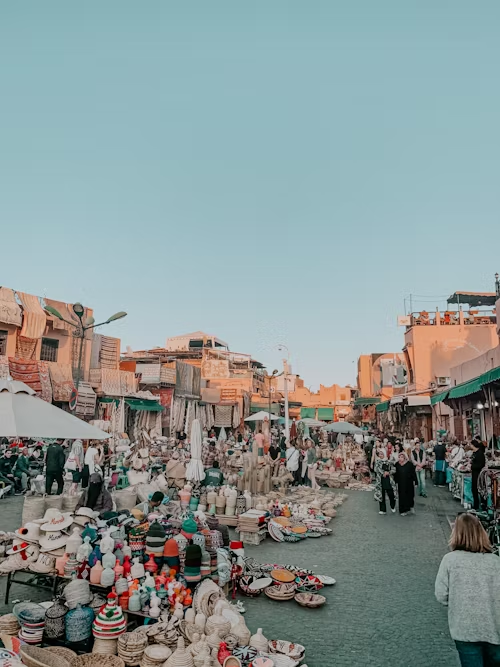
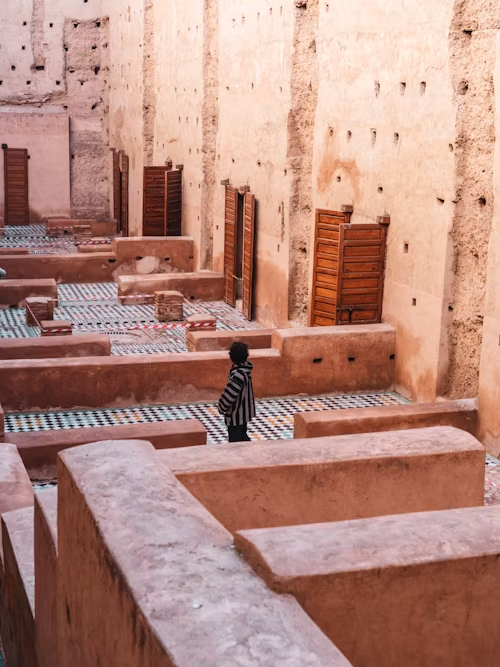
Morning with your certified guide: Bahia Palace, the Saadian Tombs, the spice market and the dyers’ souk, the leather-workers’ quarter where tanners have worked the same vats since the 14th century. Majorelle Garden in the afternoon — the electric-blue botanical garden designed by French artist Jacques Majorelle and restored by Yves Saint Laurent, with the adjacent YSL Museum. Evening free: return to Djemaa el-Fna or a hammam. Second night in Marrakech.
Day 3 — Marrakech → Kasbah Telouet → Aït Benhaddou → Ouarzazate
Depart at 8:00 AM. The road climbs immediately into the High Atlas — the Tizi n’Tichka pass at 2,260 metres, the highest paved road in Morocco. Just past the summit, your guide takes the 20-minute detour onto the old caravan road to Kasbah Telouet — the abandoned 19th-century Glaoui palace in the Ounila Valley, with intact zellige tilework and stucco ceilings that took 300 craftsmen three years to complete, now crumbling back into the Atlas in spectacular ruin. Almost every group tour passes the turning without stopping. You stop. Continue to Aït Benhaddou — the UNESCO ksar where Lawrence of Arabia and Gladiator were filmed. Your local guide leads you inside the walls. Lunch above the ksar. Afternoon into Ouarzazate. Night in a boutique hotel or riad.
Day 4 — Ouarzazate → Fint Oasis → Skoura → Dadès Valley
An 8-kilometre off-road detour south of Ouarzazate to Fint Oasis — a hidden palm canyon carved in red rock that has sheltered travellers for centuries and served as a backdrop for multiple film productions. Virtually unknown to package tours. East along the Route des Mille Kasbahs through the Skoura oasis — 50 square kilometres of palm groves and olive trees, with Kasbah Amridil at its centre, one of the best-preserved kasbahs in Morocco, still partially inhabited. Rose Valley near Kelaat M’Gouna. The Dadès Gorge — the “monkey fingers” rock formations that locals name for the twisted red stone pillars rising from the canyon walls. Night in a gorge-view kasbah hotel above the canyon.
Day 5 — Dadès → Todra Gorge → Rissani → Merzouga (Night in the Dunes)
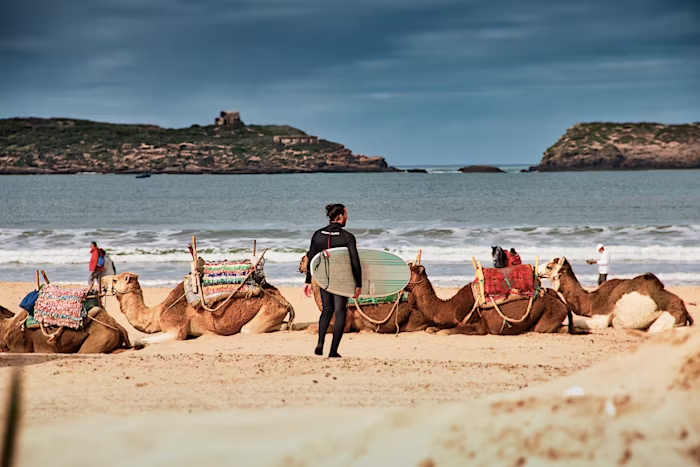
Walk the Todra Gorge — 300-metre limestone walls that narrow to 10 metres at the canyon floor, a cold river running between them. Lunch in Tinghir. Cross the flat stone hamada eastward through the fossil-bearing plain to Rissani, the ancient Alaouite capital with its traditional souk (Tuesday, Thursday, and Sunday). The road east of Rissani crosses lunar terrain before Erg Chebbi appears: a wall of orange dunes 150 metres high rising from flat desert, completely unexpected. Check in at your riad on the dune edge. At 4:30 PM, mount your camel for the sunset trek into the heart of the dunes — the sand changes colour every ten minutes. Night in your private luxury glamping tent at the dune crest: en-suite bathroom, king bed, private terrace facing the ridge.
Day 6 — Merzouga: A Full Day in the Sahara
Your guide wakes you at 5:15 AM for the dune climb — 40 minutes of soft sand to the 150-metre crest, just before first light. The Sahara at sunrise is copper, rose, and deeply shadowed. Camel back to camp. Hot breakfast on your private terrace. Then a full day in the Merzouga world. Khamlia — 8 kilometres from Merzouga, a Gnawa community completely off the standard circuit — fills a family room with guembri bass lute and iron castanets in a trance tradition brought from sub-Saharan Africa generations ago. A nomadic Berber family visit on the desert plateau: mint tea in a goat-hair tent. The quiet Erg Znagui dunes, 2 kilometres from the village, for the silence most visitors never reach. Optional sandboarding in the afternoon. Second night at your riad on the dune edge.
Day 7 — Merzouga → N’Kob → Draa Valley → Ouarzazate
The return takes an entirely different route from the outward journey — a completely new landscape for your final five days. South through N’Kob first: a small desert-edge village containing more than 100 intact kasbahs in a single settlement, almost no foreign visitors, and some of the finest kasbah photography on the entire circuit. The Draa Valley westward — Morocco’s longest palm-lined river corridor, ancient ksour villages, date palm plantations stretching to the horizon. Ouarzazate for lunch and an afternoon stop. Night in Ouarzazate.
Day 8 — Ouarzazate → Essaouira (The Atlantic World)
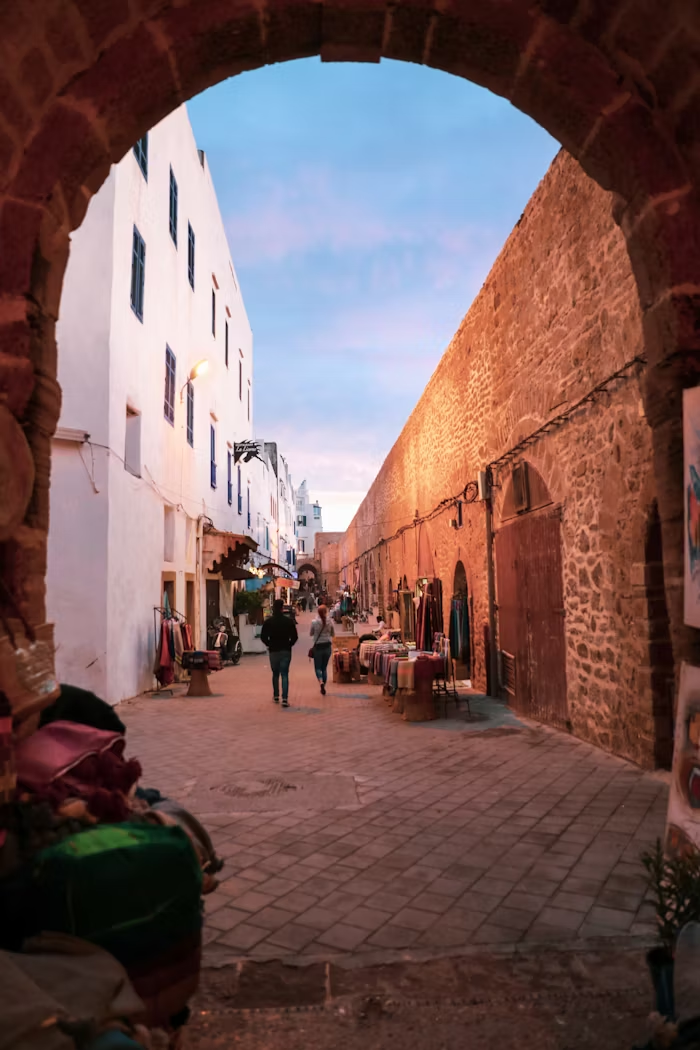
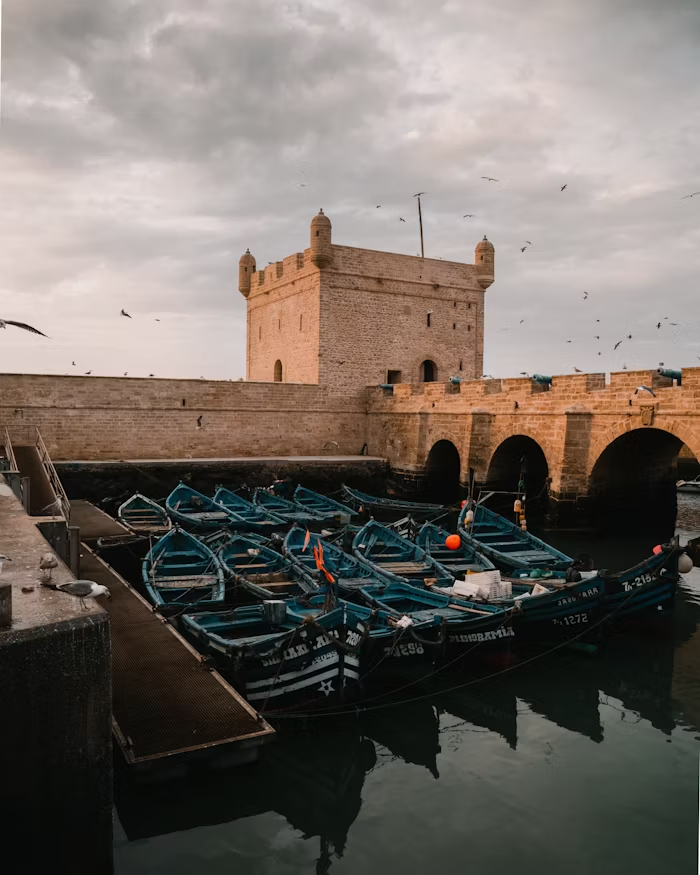
The drive west via the Sous Valley approach reaches Essaouira mid-afternoon — and the shift from desert south to Atlantic coast is one of the most striking geographic transitions in Morocco. Your guide walks the essentials: Skala du Port sea fortress and the circular window that frames the medina (the most photographed angle in the city), the blue fishing boats of the working port, the medina souks with thuya wood workshops, Gnawa music stalls, and the silver jewellery quarter. Before the return drive, a short detour to Cap Sim — a headland 10 kilometres south of the medina with wild dunes, argan forest, and a 1917 lighthouse on a Fresnel mercury-bath system, almost no tourists, 20 minutes of Atlantic silence. Dinner on a medina terrace. Night in an Essaouira riad.
Day 9 — Essaouira → Casablanca → Rabat
Morning free in Essaouira — beach walk, final market browsing. Drive north to Casablanca: Hassan II Mosque, built over the Atlantic on a glass floor, one of the largest mosques in the world and the only one in Morocco open to non-Muslims. Continue to Rabat — Morocco’s royal capital since the French Protectorate of 1912. The Kasbah of the Udayas (UNESCO, 12th-century Almohad fortress above the river mouth), Hassan Tower (the unfinished 12th-century minaret), Mausoleum of Mohammed V (finest example of contemporary Moroccan craftsmanship). Night in a Rabat boutique hotel.
Day 10 — Rabat → Meknes → Volubilis → Moulay Idriss Zerhoun (Overnight)
Optional Chellah visit in Rabat — Merinid ruins over Roman foundations, nesting storks. Drive to Meknes: Bab Mansour (the most ornate gate in Morocco), the royal granaries and stables of Sultan Moulay Ismail (who built a city to rival Versailles in the 17th century), Place el-Hedim. Then Volubilis — the Roman Empire’s most southerly city, abandoned in the 11th century, its 2nd-century mosaic floors still in situ. The Triumphal Arch stands. The view from the Capitoline Temple across the Zerhoun plain is immense. Instead of returning to Fes or Meknes, you spend the night in Moulay Idriss Zerhoun — the holy hilltop city 4 kilometres from the ruins named after Morocco’s founding Islamic dynasty. Non-Muslims could not overnight here until 2005. After the last day-tripper leaves, the town belongs to pilgrims, locals, and your group. Dinner at your riad. Night in Moulay Idriss Zerhoun.
Day 11 — Moulay Idriss → Sefrou → Fes (First Evening)
Early morning walk through Moulay Idriss before anyone else arrives — the Sentissi cylindrical minaret (the only one in Morocco), panoramic views from Khaybar hill, olive-scented lanes unchanged since the 18th century. Drive to Sefrou, 30 kilometres south of Fes: known as Little Jerusalem for its historically large Jewish population, a Berber-Jewish town with a waterfall that tumbles through the medina walls, a mellah where Hebrew inscriptions still mark doorways above Arabic carvings. Almost no foreign visitors on any day of the year. Arrive Fes late afternoon. Golden-hour guided walk: Bou Inania Madrasa, the tanneries from the terrace above, Medersa el-Attarine in the last light. Night in a riad inside Fes el-Bali.
Day 12 — Fes with a Certified Fassi Guide. Return via Ifrane & Azrou
Your certified Fassi guide leads the morning: Al-Qarawiyyin University (founded 859 AD, recognised as the world’s oldest continuously operating university), Chouara Tannery in morning light, Nejjarine Museum in the restored caravanserai, Royal Palace gates (seven tonnes of hand-hammered brass), Bou Inania Madrasa interior — the finest Marinid stonework in Morocco. Early afternoon departure for Marrakech via the Middle Atlas: Ifrane (the French colonial alpine village at 1,650 metres that surprises every visitor with its European chalet rooflines), Azrou cedar forest (wild Barbary macaques living freely in the cedars — the same species as Gibraltar, one of the last places on earth they live wild). Arrive Marrakech late evening. Final night in a medina riad.
12 Days in Morocco Tour Highlights {#highlights}
Three Worlds in Twelve Days — Atlantic, Sahara, and Imperial Cities
Morocco contains three completely different geographic and cultural worlds within a single country. The Atlantic coast: Essaouira’s wind-sculpted medina, blue fishing boats, the Gnawa music tradition, and the wild Cap Sim headland. The Saharan south: the kasbah route through Aït Benhaddou and the Dadès and Todra gorges, two nights at Erg Chebbi with Khamlia, the nomadic family visit, and the Erg Znagui dunes that almost no tour includes. The imperial city corridor: Casablanca’s Hassan II Mosque, Rabat’s Almohad kasbah, Volubilis’s Roman mosaics, Moulay Idriss Zerhoun at night, Sefrou’s Jewish medina, and Fes with a certified Fassi guide. These three worlds are Morocco’s complete picture. Our 12 days in Morocco tour is one of the few private itineraries that covers all three in a single circuit without doubling back.
The Complete Loop — Why This Route Works
The straight-line route from Marrakech to the desert to Fes and back is logical but it repeats the same Atlas crossing twice and skips the Atlantic entirely. Our loop goes outward via the south (Atlas → kasbah route → Sahara), crosses west to the coast (Draa Valley → Essaouira), then arcs north (Casablanca → Rabat → Volubilis → Moulay Idriss) before finishing in Fes and returning through the Middle Atlas cedar forests. The result is that every day on this 12 days in Morocco tour shows you a different landscape — 12 days, 12 genuinely different visual worlds, zero repeated ground. Explore our full range of Morocco tours to see how this grand circuit compares with our shorter multi-day options.
The Seven Stops Nobody Else Makes
Seven specific stops on this tour appear on virtually no standard Morocco itinerary: Kasbah Telouet (the abandoned Glaoui palace on the old caravan road above the Tichka), Fint Oasis (8km off-road from Ouarzazate), Khamlia (the Gnawa village near Merzouga), N’Kob (100+ intact kasbahs, almost no visitors), Cap Sim (the wild Atlantic headland south of Essaouira), overnight Moulay Idriss Zerhoun (where non-Muslims could not stay until 2005), and Sefrou (the Berber-Jewish medina with a waterfall inside its walls). These are not additions to the standard itinerary — they are the structural choices that make the difference between a thorough Morocco tour and one that people describe years later as a genuine encounter with the country.
Two Nights in the Sahara — Why the Extra Night Changes Everything
One night in Erg Chebbi gives you a sunset camel trek and a sunrise dune climb. Two nights give you all of that plus an entire unhurried day in the Merzouga world: Khamlia Gnawa village, the nomadic family visit, the Erg Znagui quiet dunes, sandboarding, and time to simply sit on a dune crest and watch the light change without a schedule pushing you forward. The private luxury glamping tent on Night 5 gives the first desert night the comfort it deserves — en-suite bathroom, king bed, private terrace. The boutique riad on Night 6 gives you a hot shower and a full breakfast before the long return drive. This is the structural logic behind 12 days in Morocco rather than 10.
Practical Information for Your 12 Days in Morocco Tour {#practical}
Best season: Spring (March to May) and autumn (September to November) are the finest months for 12 days in Morocco — comfortable temperatures across all three geographic zones, the High Atlas at its greenest, and the desert light most vivid. October is the single best month: Fes in its full working rhythm, the desert warm but not extreme, and the Atlantic coast at its clearest. Summer is possible — Essaouira stays cool year-round and the Middle Atlas is pleasant — but Fes and the desert south can be very hot in July and August. Winter visits are quiet and dramatic: snow on the Atlas passes, cold clear desert nights, an uncrowded Fes medina. For current conditions across all regions, the Morocco Met Office covers the full country reliably.
Pace and driving: No day on this 12 days in Morocco tour involves more than 5 hours of driving, and most are significantly shorter. The longest transfer is Day 9 (Essaouira to Rabat, approximately 5 hours with the Casablanca stop). Day 12 (Fes to Marrakech via Ifrane and Azrou) is approximately 6 hours with stops. All other driving days are 3 to 4 hours with meaningful stops throughout.
What to pack: Layered clothing covering three distinct climate zones — the High Atlas (cold at altitude), the Saharan south (30–45°C days, potentially 5°C nights in winter), and the Atlantic coast (cool and windy year-round). Walking shoes for medina cobblestones, the Todra Gorge, Aït Benhaddou’s uneven terrain, and the dune climb. A swimsuit for Essaouira’s beach (May to October). Modest dress at religious sites throughout. A light windproof jacket for Essaouira and Cap Sim regardless of season. Cash in Moroccan dirhams for entrance fees, lunches, and souvenirs — withdraw in Marrakech before departure.
Fitness level: Low to moderate. No day requires strenuous physical activity. The Todra Gorge walk is flat. The dune climb on Day 6 is 40 minutes of soft-sand effort. Aït Benhaddou involves uneven terrain. All medina walks are at a comfortable pace. Suitable for all ages including older travellers and families with children from age 5.
Frequently Asked Questions {#faq}
Is 12 days enough to see Morocco?
Twelve days is genuinely sufficient for a complete and satisfying experience of Morocco if the itinerary is well-structured. It is the minimum to cover all three of Morocco’s distinct worlds — Atlantic coast, Saharan south, and imperial cities — without feeling rushed. Shorter itineraries (7 to 10 days) typically skip the Atlantic coast entirely or allocate Fes a single day. Our 12 days in Morocco tour gives the Sahara two full nights, Fes two full days with a certified guide, and the Atlantic an overnight in Essaouira, which is the correct balance for each destination.
What is the best route for 12 days in Morocco?
The most rewarding route for 12 days in Morocco is a complete loop from Marrakech rather than a straight line. Going outward via the High Atlas, the kasbah route, and the Sahara south, then crossing west to the Atlantic coast, then arcing north through the imperial cities, and returning via the Middle Atlas cedar forest means every day shows a different landscape. No ground is repeated. The alternative — straight Marrakech-to-desert-to-Fes-and-back — crosses the Atlas twice and misses both the Atlantic and the full imperial cities circuit.
How much does a 12-day private Morocco tour cost?
Private Morocco tour pricing varies considerably based on accommodation quality, group size, and seasonal demand. Our 12 days in Morocco tour includes 11 nights in riads and boutique hotels (with one luxury glamping tent night at Erg Chebbi), two certified local guides, all breakfasts, five dinners, and the complete camel experience at Merzouga. We provide an exact quote within 24 hours via WhatsApp — the per-person price decreases significantly with group size. Contact us to discuss your dates and preferences.
What is the best time of year for 12 days in Morocco?
October is the single best month for 12 days in Morocco — warm and stable across all regions, the desert manageable, Fes in its autumn rhythm, and the Atlantic coast at its most photogenic. March to May is the second-best window, with almond and cherry blossom in the Atlas and the rose harvest in Kelaat M’Gouna in late April. Summer is workable but the desert south and the imperial cities can be extreme in July and August. Winter (December to February) is beautiful and uncrowded, with snow on the high passes adding dramatic scenery.
Can 12 days in Morocco include both the Sahara and the Atlantic coast?
Yes — and this is one of the defining features of a well-designed 12-day Morocco itinerary. Our complete loop structure is specifically built to include both. The Sahara (Days 5–7 via the kasbah route) and the Atlantic coast (Days 8–9 via Essaouira) are on opposite sides of the country, which is why most shorter Morocco tours choose one. Twelve days, properly structured as a circuit rather than a straight line, is enough to include both without a single rushed day.
How to Book Your 12 Days in Morocco Tour {#book}