Horse Riding Marrakech – Palmeraie Desert Tour for All Levels
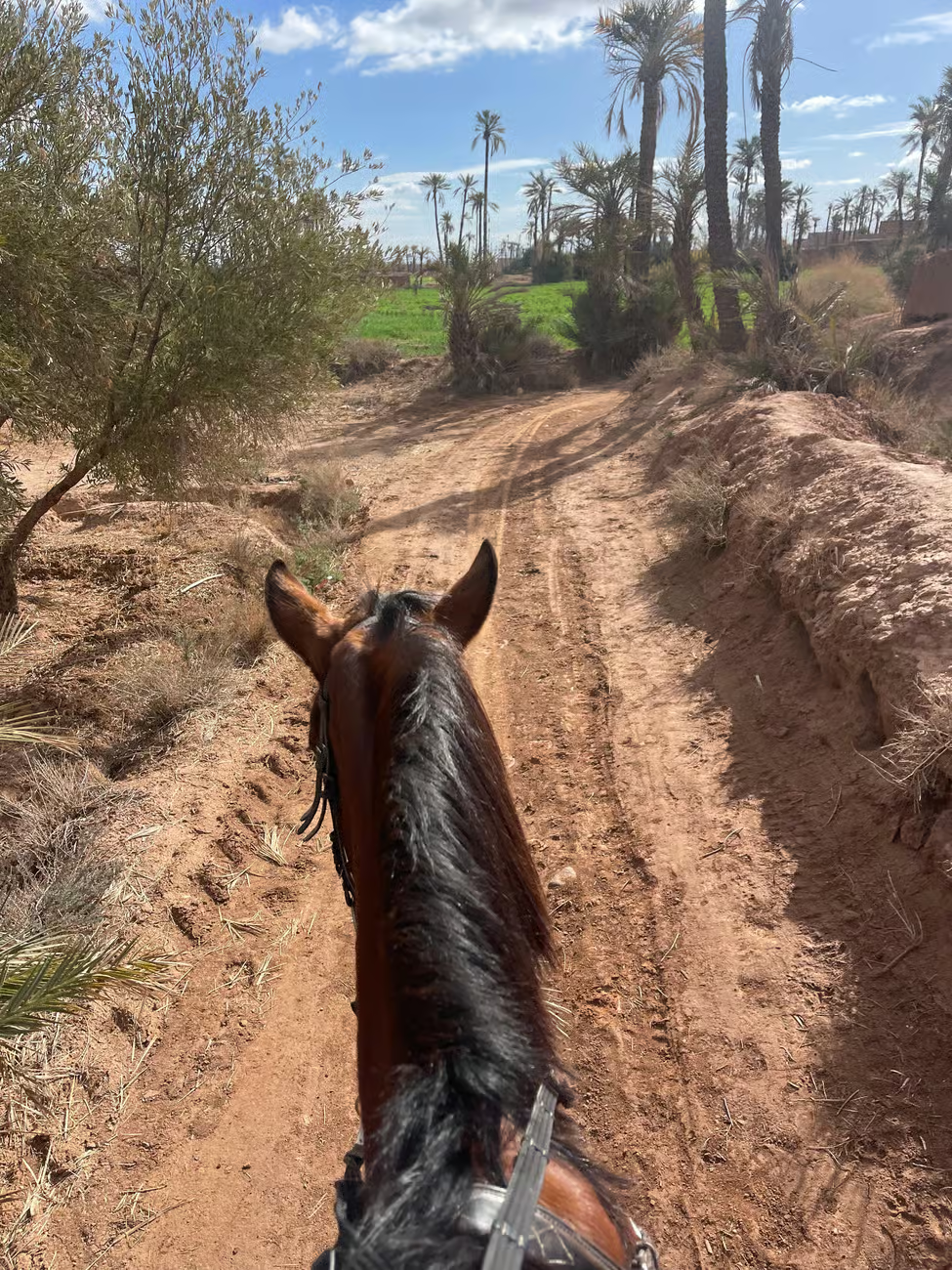
Horse riding Marrakech through the Palmeraie is one of the few activities in the city that delivers silence. Twenty minutes from Djemaa el-Fna the horses are saddled, the mint tea is poured, and the only sound is hooves on packed earth and wind in 100,000 date palms. The Palmeraie — Marrakech’s historic palm oasis on the city’s northern edge — has been here since the Almoravid dynasty planted it in the 11th century. It is not the Sahara, and we will not pretend otherwise: there are no towering dunes here, and a handful of villas have been built in the outer sections over the past decades. But the working heart of the Palmeraie — the date palm plantations, the traditional Berber homes still lived in among the trees, the long sandy tracks that open between groves — is as peaceful a landscape as Marrakech offers, and on a clear morning the High Atlas fills the southern horizon in a way that makes the horse riding feel genuinely situated in something larger than a city activity. We arrange the complete experience: private vehicle pickup, honest pace-matching by skill level, and your own table for mint tea when you return.
Table of Contents
What Is the Palmeraie and What Does the Ride Actually Look Like? {#palmeraie}
The Palmeraie — 900 Years of Oasis
The Palmeraie de Marrakech is a palm grove of roughly 13,000 hectares on the northern edge of the city — over 100,000 date palms fed by the underground irrigation channels (khettaras) that the Almoravid dynasty built when they founded Marrakech in the 11th century. The palms were not ornamental; they were an agricultural infrastructure, the city’s food supply and its shade source in one, and the Berber communities who farmed them are still there today, living in the same clusters of flat-roofed homes among the trees. The outer ring of the Palmeraie has been partly developed with villas and hotel complexes over recent decades, which is why the route matters. The horse riding Marrakech experience worth booking stays in the working interior of the grove — the narrow tracks between date palm plantations, the traditional homes with their low mud-brick walls, the sandy stretches where the trees thin out and the Atlas peaks appear on the southern horizon.
What “Desert” Means Here
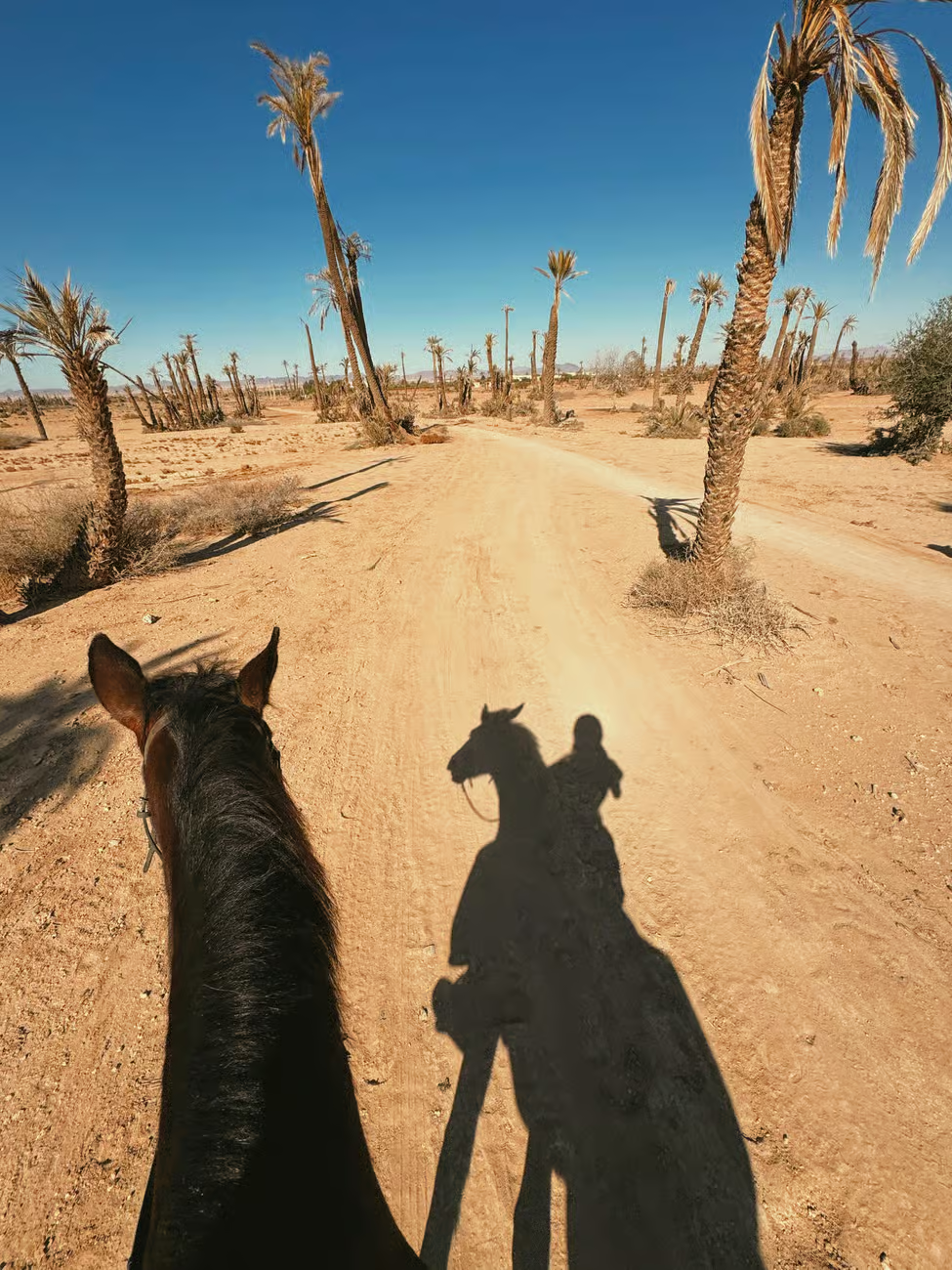
The word “desert” in the tour name refers to the semi-arid, arid-scrub landscape surrounding and interspersed with the Palmeraie — packed sandy earth, sparse scrub vegetation, and open sky. It is not a Saharan landscape. There are no sand dunes. This matters because some travellers arrive expecting a desert-dune experience and are briefly surprised. The Palmeraie is its own thing — drier and more austere than most European or North American ideas of an oasis, but not dramatically dramatic in the way the Sahara is. What it is, genuinely, is quiet, spacious, and beautiful in a spare way that the city side of Marrakech never is. Read what past travellers say about finding space and silence so close to the medina.
What’s Included in Your Horse Riding Marrakech Experience {#included}
✅ Included:
- Private vehicle hotel pickup and drop-off in Marrakech
- Mint tea on arrival at the eco-lodge/equestrian centre
- Riding helmet and basic safety equipment
- 2-hour guided horse ride through the Palmeraie
- Horses matched to each rider’s experience level
- Photo stops at scenic points during the ride
❌ Not Included:
- Travel insurance
- Professional photography or video package (available on request)
- Tips for guide and stable staff
All rides are arranged privately for your group. We confirm your ride time and pickup within 24 hours.
What to Expect on Your Horse Riding Marrakech Morning or Evening {#experience}
Pickup and the Drive to the Palmeraie
Your private vehicle collects you from your hotel or riad in Marrakech. The drive to the equestrian centre on the edge of the Palmeraie takes approximately 20 to 25 minutes — roughly 10 kilometres from the medina through the northern outskirts of the city. Arrival is at an eco-lodge where Moroccan mint tea is served poolside or on a shaded terrace while your guide assesses each rider’s experience level.
Horse Matching and Safety Briefing
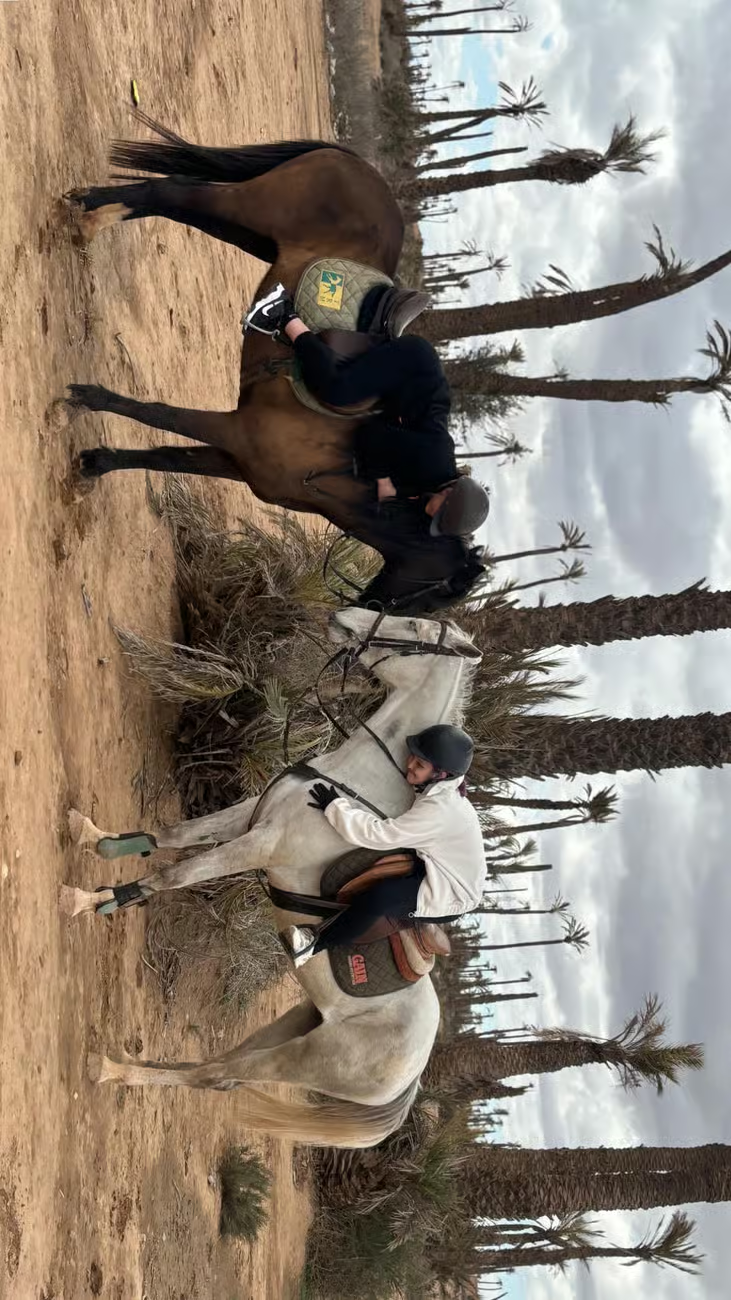
This is where horse riding Marrakech experiences most commonly go wrong when not carefully managed: a complete beginner on a horse that wants to move, or an experienced rider on a horse that won’t. Your guide asks each person directly about their experience — whether they have ridden before, how recently, what paces they are comfortable with — and assigns horses accordingly. Genuinely first-time riders are paired with calm, steady horses that respond to the guide’s lead and will not startle in the grove. Riders who want to trot or canter are grouped accordingly and matched with more responsive horses. Helmets are fitted for all riders.
The Ride — 2 Hours Through the Palmeraie
Mounted and moving, the group follows the guide’s route into the working interior of the Palmeraie. The first stretch is typically through the denser palm sections — narrow sandy tracks between tall date palms, dappled shade, the sound of the horses’ hooves on packed earth. The pace begins at a walk for everyone. As the route opens onto wider sandy tracks and the plantation spacing increases, the guide allows confident riders to move into a trot on the open sections; experienced riders who want a canter get the opportunity on the longest open stretches. The route passes traditional Berber homes within the grove — low mud-brick walls, rough wooden doors, small vegetable gardens tucked between the palms — that give the riding a cultural dimension that a paddock or training centre ride cannot. On clear days the High Atlas peaks appear above the southern palm line, snow-capped for much of the year, providing a visual context that reminds you exactly where you are.
Return and Mint Tea
The ride returns to the eco-lodge from the Palmeraie. Riders have a few minutes to walk with the horses, photograph them, or simply rest before the private vehicle collects the group for the return to Marrakech.
Horse Riding Marrakech Highlights {#highlights}
Riders of All Levels Welcome — Genuinely
The horse riding Marrakech market has a specific quality problem: many operators run a fixed group route at a fixed pace regardless of who is in the saddle. A nervous first-timer and a confident experienced rider follow the same track at the same walk. Neither has the best experience. Our version of this activity starts with an honest conversation about each person’s skill level before the horses are mounted. The rider who has never been on a horse before gets a calm, steady animal and a guide who checks in regularly. The rider who wants more — trot sections, canter on the open tracks, a horse with more energy — gets that too. This is not a technical distinction; it is the difference between the ride being something you survive and something you remember.
The Palmeraie at Sunrise or Sunset
The Palmeraie has three genuinely different characters depending on time of day. In the morning, the air is cool, the light is low and golden on the palm trunks, and the grove is quiet — most tours have not yet arrived and the Berber families are going about their morning before the day warms. In the afternoon it is hotter but the Atlas views are at their clearest. At sunset the light shifts rapidly from amber to gold to deep orange, the palm silhouettes against the sky are the best photographs of the day, and the temperature drops to something genuinely pleasant. The horse riding Marrakech experience is available at all three times — the morning and sunset slots are the most popular, and both are worth prioritising over the midday slot in summer. Explore all our Marrakech activities and Morocco tours to see how this fits alongside the hot air balloon, the Agafay desert evening, and the city workshop programme.
Practical Information {#practical}
What to wear: Closed-toe shoes are essential — no sandals or open-toed footwear in the stirrups. Long trousers are strongly recommended for riding comfort; shorts are fine to travel in but become uncomfortable in a saddle over two hours. A lightweight long-sleeved layer is useful for sun protection on the open tracks regardless of temperature — UV exposure is significant on the flat Palmeraie terrain. Sunglasses, a hat that fits under a helmet, and sunscreen for exposed skin. Leave jewellery and loose accessories in the vehicle or your hotel.
Summer riding: July and August midday temperatures in the Palmeraie reach 35 to 40°C. Morning slots (beginning around 8:00 AM) and sunset slots (beginning around 5:30 to 6:00 PM) are both significantly more comfortable and more beautiful. We strongly recommend booking the morning or sunset slot in summer — the afternoon slot is available but we advise against it in July and August specifically.
Children: Children aged 6 and above can ride independently on appropriately matched calm horses. Younger children can ride with an adult or on a lead rein managed by the guide — ask when booking and the guide will arrange accordingly. The ride is one of the most popular family activities in Marrakech for children aged 6 to 14; horses are chosen specifically for patience and steady temperament when young riders are in the group.
Pregnancy: Horse riding is not recommended during pregnancy. Please mention this when booking so we can suggest alternative Marrakech activities.
The eco-lodge: The equestrian centre/eco-lodge is a working riding facility, not a luxury resort. The mint tea and poolside arrival are a genuine pause before the ride, not a feature attraction.
Frequently Asked Questions {#faq}
Is horse riding in Marrakech suitable for beginners?
Completely. Both complete beginners and experienced riders are accommodated on the same booking — the difference is in how your horse is chosen and what paces you are offered during the ride. Beginners are matched with calm, steady horses and the guide maintains a walk pace with them throughout. There is no minimum experience requirement and no riding test before the session.
What is the Palmeraie in Marrakech?
The Palmeraie de Marrakech is a historic palm oasis on the northern edge of the city — roughly 13,000 hectares and over 100,000 date palms planted and maintained since the Almoravid dynasty founded Marrakech in the 11th century. It is fed by a network of ancient underground irrigation channels called khettaras, and the Berber communities who have farmed it for centuries still live within the grove. Horse riding Marrakech through the Palmeraie gives you access to the working interior of this oasis — the tracks and plantations that most city visitors never see.
What should I wear for horse riding in Marrakech?
Closed-toe shoes, long trousers for riding comfort, and a lightweight long-sleeved top for sun protection on the open sections. A hat that fits under the riding helmet provided is useful. Sunglasses and sunscreen are important regardless of cloud cover. Avoid loose scarves or dangling jewellery that could catch.
Is the Palmeraie horse riding actually a desert experience?
Partially — and it is worth being honest about this. The terrain is semi-arid sandy scrubland and date palm plantation, not Saharan sand dunes. Some travellers expect towering dunes and are briefly surprised to find flat, sandy, palm-lined tracks instead. The Palmeraie’s character is its own: quiet, spacious, historically significant, and beautiful in a spare way that contrasts sharply with the medina’s density. If you are specifically hoping for a dune experience, the Agafay Desert (40 minutes south) or the Sahara (two days south) are the right destinations.
What is the best time of day for horse riding in Marrakech?
Morning (from approximately 8:00 AM) and sunset (from approximately 5:30 PM) are the best slots for both comfort and photography. Morning offers cool air, low golden light on the palm trunks, and a quiet Palmeraie before the day’s heat builds. Sunset delivers the most dramatic light, the best Atlas silhouettes, and the most comfortable temperature if you are visiting in summer. The afternoon slot is fine in cooler months (October to April) but is not recommended in the July–August heat.
How to Book Your Horse Riding Marrakech Tour {#book}
Send us a message on WhatsApp — +212 724 593 208 — or email contact@yourguidetomorocco.com with your preferred date, time slot (morning, afternoon, or sunset), group size, any children’s ages, and your riding experience level. We confirm within a few hours — usually much faster.