
Table of Contents
Moroccan Customs and Traditions: What Every Visitor Needs to Know Before They Arrive
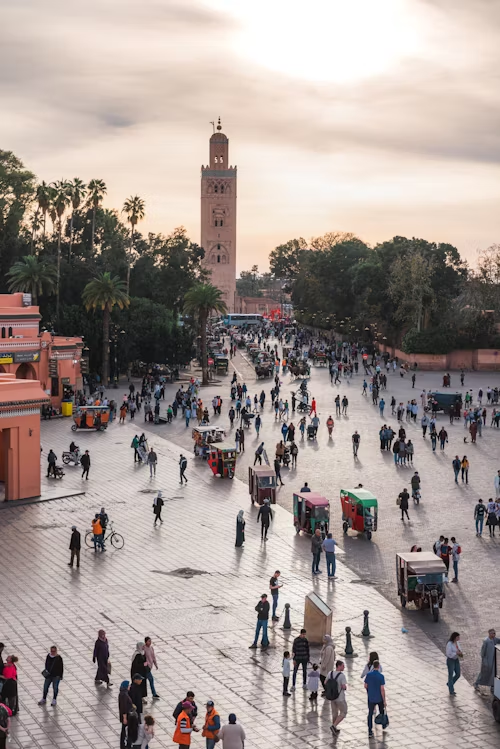
Morocco doesn’t ease you in. From the moment you step off the plane, the call to prayer, the smell of cumin and charcoal, the labyrinthine medina streets — it lands all at once, and it’s extraordinary. But for first-time visitors, navigating Moroccan customs and traditions without context can lead to awkward moments, missed experiences, and a surface-level trip. Understanding the culture before you arrive isn’t just practical — it’s the difference between observing Morocco and actually being part of it.
Our guides have been leading private tours across Morocco for over a decade, from the alleys of Marrakech to the gorges of Todra and the dunes beyond Merzouga. This guide covers the 7 essential aspects of Moroccan customs and traditions every traveler should understand — religion, food, dress, weddings, festivals, hospitality, and the local knowledge that no guidebook gives you.
“Traveling with a local guide completely changed how I experienced Morocco. I wasn’t just seeing places — I was understanding them.” — Sarah M., London, private tour client (2024)
Understanding Moroccan Customs and Traditions: Start Here
Before diving into specifics, it helps to understand the foundation. Moroccan customs and traditions draw from three deep roots: Islam, Amazigh (Berber) heritage, and the social values of hospitality that Moroccans call diyafa. These three forces shape everything from how meals are eaten to how strangers are welcomed. Visitors who understand this foundation stop seeing Moroccan culture as a series of rules to follow and start experiencing it as a living, generous way of life. According to the World Bank’s Morocco country profile, Morocco’s unique blend of Arab, Amazigh, and sub-Saharan African influences makes it one of the most culturally layered destinations in the world.
1. Religion and Daily Life in Morocco
Islam and Morocco culture are inseparable. Islam shapes the rhythm of daily life in ways that visitors notice immediately: the five calls to prayer that punctuate each day, the Friday afternoon closure of many shops, and the month of Ramadan when the entire country transforms. About 99% of Morocco’s population is Muslim, and Islam here is lived rather than performed. Mosques are active spaces of community, and the muezzin’s call is not background noise — it’s a cue that structures the day for millions of people across the country.
What this means for travelers: Dress modestly when entering medinas, mosques (where permitted), and rural areas. During Ramadan, eat and drink out of public sight during daylight hours — a gesture of respect that locals notice and deeply appreciate. Friday midday is sacred; plan your city exploration around it rather than through it. Non-Muslim visitors are not permitted to enter most Moroccan mosques, but the Hassan II Mosque in Casablanca — recognized by UNESCO as a masterpiece of Moroccan craftsmanship — is a notable exception and one of the most breathtaking buildings in Africa.
Ready to experience Moroccan culture with a guide who can open doors that stay closed to independent travelers? Enquire about our private Morocco tours →

2. Traditional Moroccan Food and Dining Etiquette
Morocco culture food is not about recipes. It’s about ritual, hospitality, and the signal that food sends: you are welcome here, you matter. The centerpiece of Moroccan home cooking is the tagine — a slow-cooked stew of meat, preserved lemon, olives, and spice, eaten communally from the same dish. Couscous on Friday is a near-sacred tradition, prepared by the women of the household and shared after Friday prayers. Street food — merguez sandwiches, bissara (fava bean soup), msemen flatbread — is equally central to daily life, and our guides know exactly where to eat and when.
Key dining customs to know before you sit down at any Moroccan table:
- Eat with your right hand. The left hand is considered unclean in Moroccan tradition.
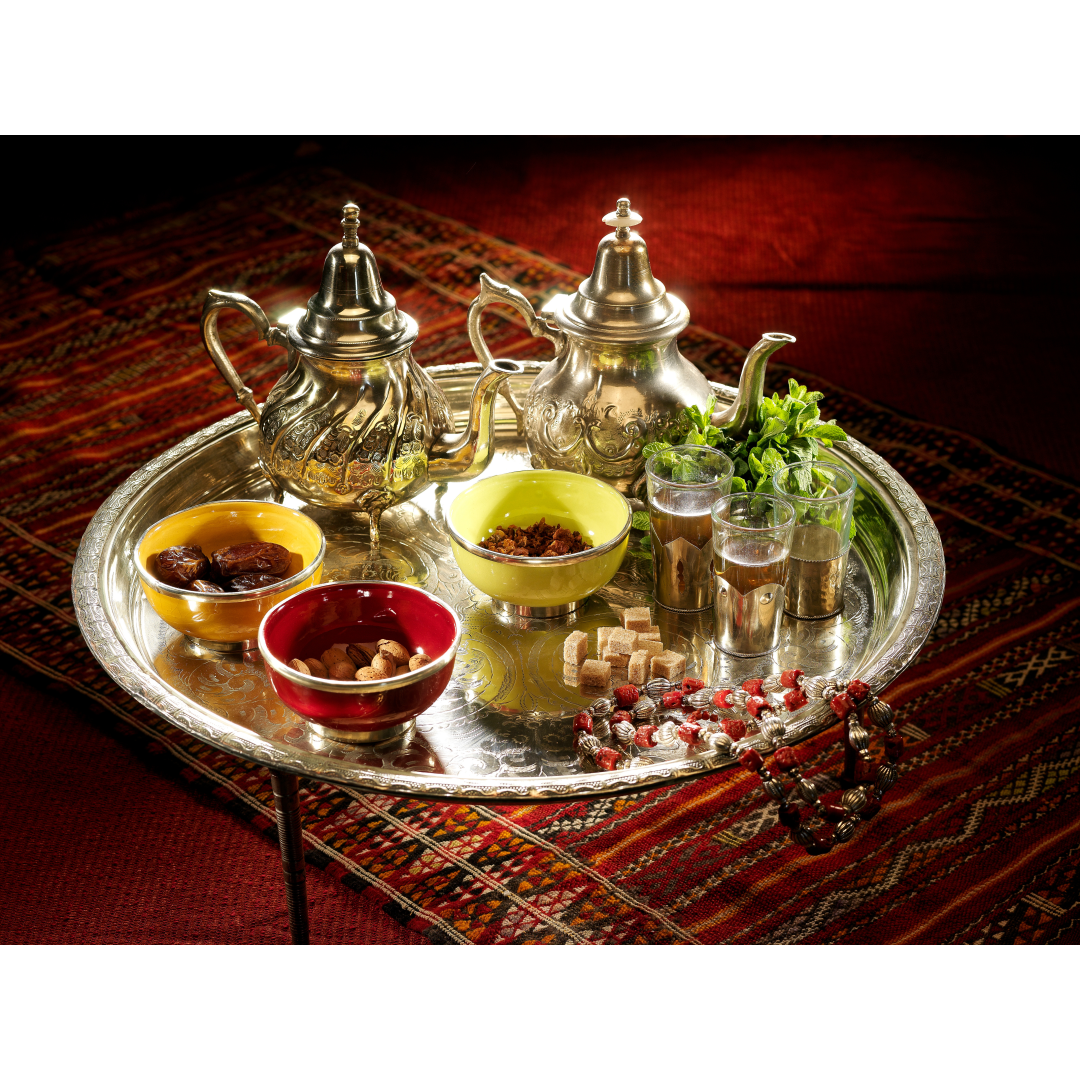
- Always accept mint tea. Refusing the first glass offered in a shop or home is considered rude. Tea is poured from height — the foam signals freshness and the care of the host.
- Don’t waste bread. Khobz (Moroccan bread) is considered sacred. Leaving it on the floor is disrespectful; discarded bread is placed on a ledge for birds to eat.
- Eat with gratitude. Bismillah (in the name of God) is said before eating; alhamdulillah (praise be to God) is said after. Guests are never required to say these, but knowing them signals genuine respect.
3. What People Wear: Dress Codes and Clothing Traditions
Morocco culture clothing varies enormously by region, generation, and context — but the thread running through all of it is modesty. The djellaba is the iconic Moroccan garment: a long, hooded robe worn by both men and women, in wool for winter and cotton for summer. In cities you’ll see women in everything from jeans to full hijab; in rural areas and conservative towns, modesty expectations are higher and more consistently observed.
For visitors, the practical rule is straightforward: cover your shoulders and knees in medinas, souks, religious sites, and rural communities. In the tourist zones of Marrakech or Essaouira, this is less strictly enforced — but it’s always respected and always noticed. Women traveling solo will find that a headscarf, loosely worn, dramatically reduces unwanted street attention. This is a personal choice, not a requirement. If you attend a Moroccan wedding or regional festival, wearing a kaftan — the embroidered, floor-length formal garment Moroccan women wear for celebrations — is the highest form of respect and one that locals remember warmly.
4. Moroccan Wedding Traditions and Celebrations
Moroccan culture marriage is not a single event — it’s a multi-day ceremony, a neighborhood celebration, and a public declaration of community all at once. Traditional Moroccan weddings last two to three days and involve the entire extended family and neighborhood. The bride undergoes a hammam ritual, an intricate henna ceremony (handled by a specialist called a negafa), and multiple outfit changes throughout the evening. Guests celebrate with Chaabi music, communal feasting, and the ululation of joy from the women in attendance — a sound that carries through every riad wall in the medina.
The hammam tradition deserves its own mention. Before the wedding, the bride visits the hammam — Morocco’s communal bathhouse — in a ceremonial purification ritual attended by female relatives. The hammam itself is a cornerstone of Moroccan social life beyond weddings; visiting weekly is standard, and it functions as community gathering space as much as bathhouse. If you’re in a Moroccan neighborhood when a wedding procession passes, stop and watch. You may well be invited inside. The hospitality is always genuine.
5. Morocco Traditions and Festivals: A Seasonal Calendar
Morocco traditions and festivals follow a calendar that blends Islamic observances with ancient Amazigh (Berber) celebrations and distinctly regional events — many of which never appear on standard tourist itineraries.
Ramadan transforms Morocco’s evenings into something extraordinary. Iftar, the breaking of the fast at sunset, is the most generous meal of the year. Street food vendors flood medinas at dusk; families open their doors to neighbors and strangers alike. Ramadan is one of the most beautiful times to visit Morocco — the communal atmosphere is unlike anything else on earth.
Eid Al-Fitr and Eid Al-Adha are the two great Islamic feasts. Al-Adha involves the ritual sacrifice of a sheep; streets smell of wood smoke and grilling meat for days. Expect businesses to close for several days — plan specifically for it rather than around it.
The Moussem of Tan-Tan is a UNESCO-recognized gathering of nomadic Saharan tribes in southern Morocco, featuring traditional music, camel races, and ceremonial dress from across the region. UNESCO inscribed it on the Intangible Cultural Heritage list in 2008.
The Rose Festival in Kelaat M’Gouna takes place every May in the Valley of Roses near Tinghir — a three-day celebration of the rose harvest with music, a parade of flower-covered floats, and the election of a Rose Queen. It’s extraordinary, and almost entirely unknown to international travelers. Explore our Rose Festival tour package to experience it with local access.
Fantasia (Tbourida) is a traditional equestrian display in which mounted warriors in ceremonial dress charge in formation and fire muskets simultaneously. It’s jaw-dropping, and common at summer moussems across rural Morocco.
⚠️ Important: Many of Morocco’s most powerful cultural events — regional moussems, desert celebrations, harvest festivals — have no official tourist schedule and no online booking. A private guide who tracks the local calendar is the only reliable way to experience them.
6. Moroccan Hospitality: The Tradition Underneath Every Tradition
If there is one principle that explains Moroccan customs and traditions more than any other, it is diyafa — the deep-rooted Moroccan culture of hospitality. Welcoming a guest is not a courtesy in Morocco; it is a moral obligation and a source of pride. This is why strangers offer tea in shops, why neighbors feed each other’s children, and why travelers who get genuinely lost in a medina often end up invited for lunch. Understanding this changes how you experience every interaction: the tea isn’t a sales tactic, the invitation isn’t strange — it’s the culture working exactly as it was designed to.
What this means in practice: Say yes more often than feels comfortable. Accept the tea. Sit down when invited. Ask the question you’re curious about. Moroccans who encounter travelers treating their hospitality with genuine curiosity and respect consistently go out of their way to make the experience extraordinary. The travelers who say Morocco was the best trip of their lives are, almost without exception, the ones who let the culture lead.
7. Private Tour vs. Independent Travel: What You Actually Miss
You can travel Morocco independently — millions do every year. But there is a meaningful gap between seeing Morocco and understanding it, and that gap is almost entirely filled by having a trusted local guide at your side. Moroccan customs and traditions are best experienced, not read about, and the context a local provides in real time is irreplaceable.
What independent travelers consistently miss:
- Local interpretation of religious and social customs (why, not just what)
- Access to private riad dinners, hammam ceremonies, and family homes
- Real-time navigation of cultural boundaries — what’s appropriate to photograph, when not to linger
- Festival timing — most regional celebrations have no online schedule whatsoever
What a private Morocco tour gives you:
- A guide who speaks Darija (Moroccan Arabic), Amazigh, French, and your language
- Flexibility to stop at a roadside mechoui when the smoke smells right
- Cultural translation in real time, not in a post-trip debrief
- Access to places, people, and moments that don’t appear in any guidebook
The cost difference between a private tour and a budget independent trip is smaller than most travelers expect. The experience difference is not.
Compare our private tour packages →
Frequently Asked Questions About Moroccan Customs and Traditions
Q: What are the most important Moroccan customs for tourists to respect?
A: The three most important Moroccan customs for visitors are: dress modestly in medinas and religious sites (cover shoulders and knees), always accept mint tea when it’s offered in a home or shop, and eat and drink discreetly if you’re visiting during Ramadan. These three gestures earn more genuine warmth from locals than any amount of Arabic phrase-learning.
Q: Is Morocco safe for solo female travelers?
A: Yes — Morocco is generally safe for solo female travelers, and millions visit each year without incident. Navigating medinas alone, particularly in Fes and Marrakech, can involve persistent attention from vendors and touts. Traveling with a private local guide eliminates this entirely and transforms the medina experience from stressful to genuinely extraordinary.
Q: Can tourists attend a Moroccan wedding?
A: Occasionally, yes — especially if you’re staying in a riad with staff who have community connections, or traveling with a guide who has local relationships. Moroccan hospitality is legendary; if you’re invited, go. Wear a kaftan if you can access one. Bring sweets or pastries as a gift.
Q: When is the best time to visit Morocco to experience local traditions?
A: Every season offers something distinct. Ramadan (dates shift annually) offers the most atmospheric evenings. May brings the Rose Festival near Tinghir. Summer moussems fill the rural calendar with equestrian festivals. Autumn and spring are ideal for overall travel comfort combined with cultural access. A private guide helps you align your trip with the local calendar.
Conclusion: Morocco Rewards the Curious
Moroccan customs and traditions are not a barrier to navigate — they are the whole point of coming. The tea, the prayer call, the wedding music bleeding through a riad wall at midnight, the couscous shared from a single bowl — this is Morocco. No itinerary captures it. No guidebook fully translates it.
The travelers who leave Morocco truly changed are the ones who arrived prepared to listen, who had a local voice in their ear, and who got off the tourist trail long enough to find the real thing.
If that’s the trip you want, we’d love to help you build it.
Contact us to design your private Morocco tour — custom itineraries from 5 to 21 days, built around your interests, your pace, and the Morocco most visitors never find.